RSES faculty meeting – September 2026
S. G.
- / -
Where RSES stands on diversity
A college, and Australia-wide comparison
Sia Ghelichkhan
RSES faculty meeting, 23/09/2026
Where the numbers come from
Three published rounds of ANU workforce data: 2023, 2024, 2026.
There is no 2025 data (ANU wide chaos?!).
Academic levels
Early means A, B, C.
Senior means D, E.
Percent women
Women divided by the whole headcount.
(counting staff recorded as non-binary or undisclosed)
RSES senior academic is 20 people.
One appointment moves the percentage by five points!!!
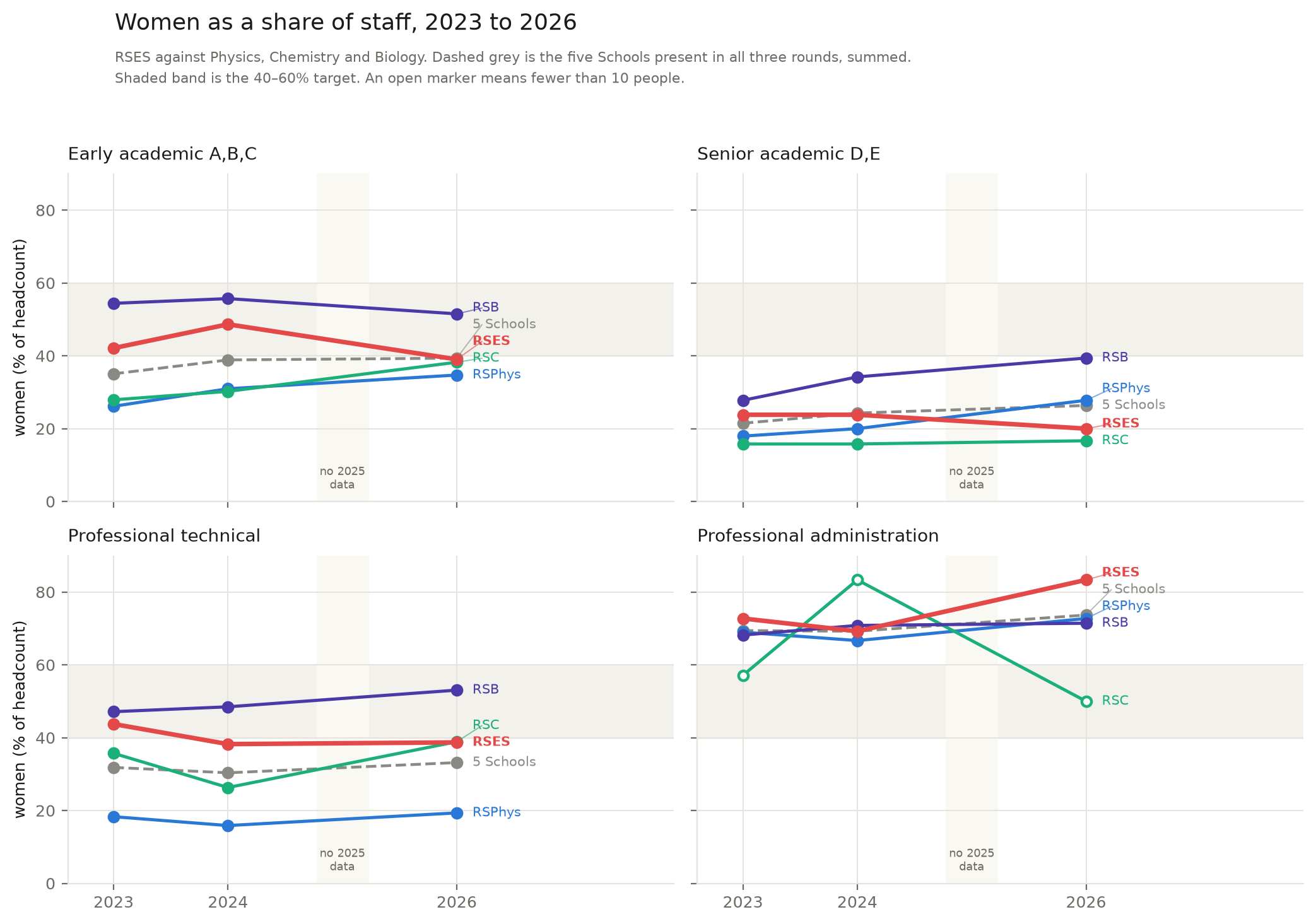
RSES has not moved while other schools have.
In 2023 RSES was ahead of both RSPhys and RSC at senior level.
In 2026 it is behind RSPhys.
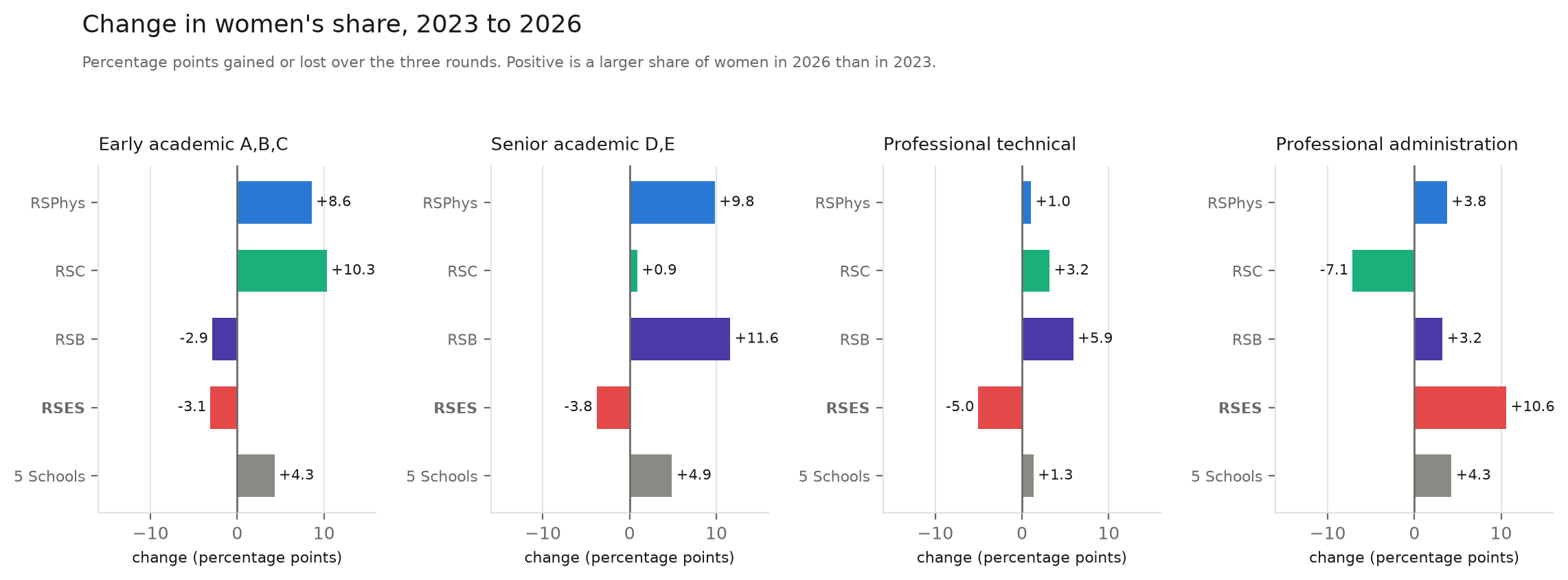
Senior academic: RSB +11.6, RSPhys +9.8, RSC +0.9, RSES -3.8. RSES is the only one of the four that fell in both academic categories.
Absolute Numbers
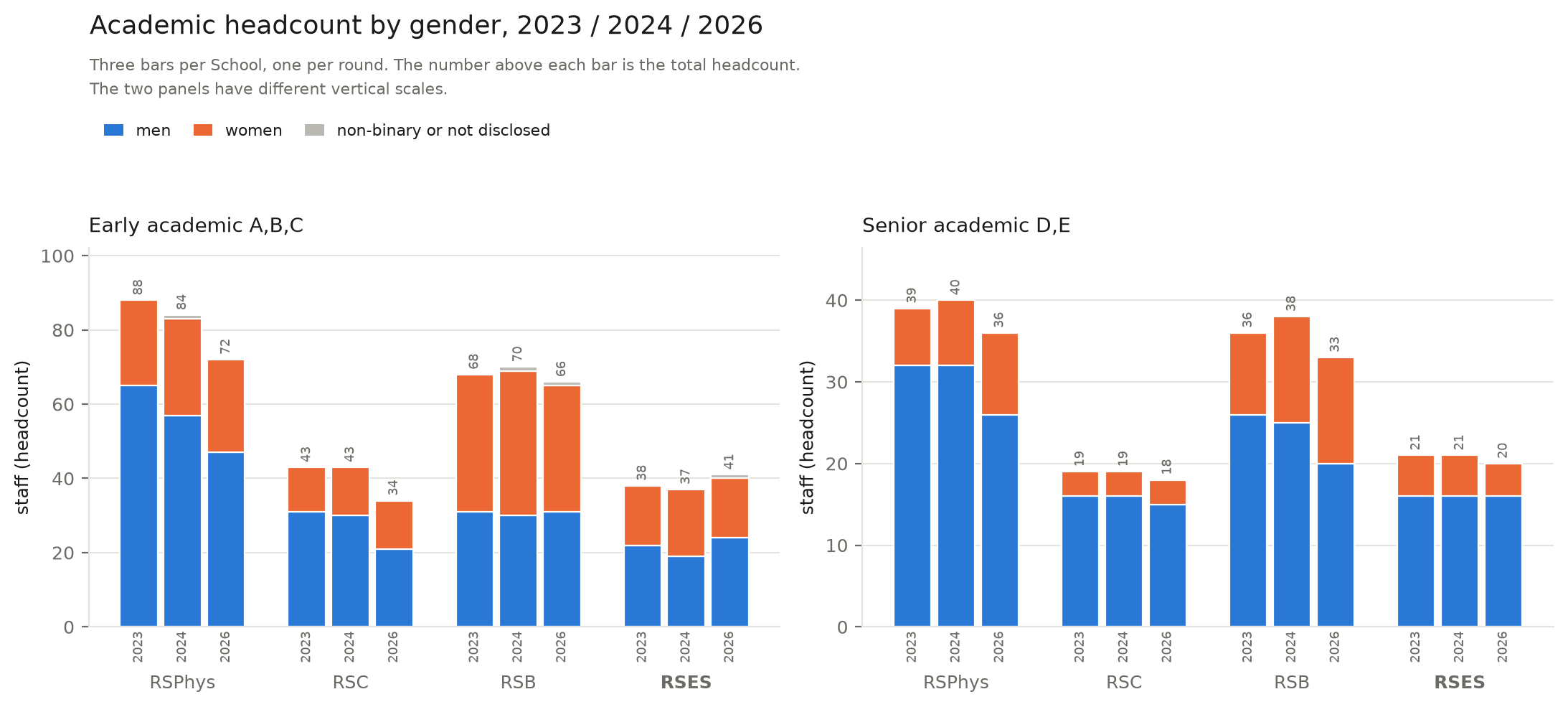
RSES senior academic is 21, 21, 20 people, with 5, 5 and 4 women. RSPhys lost 16 early academic positions and still raised its share.
Where RSES stands in 2026
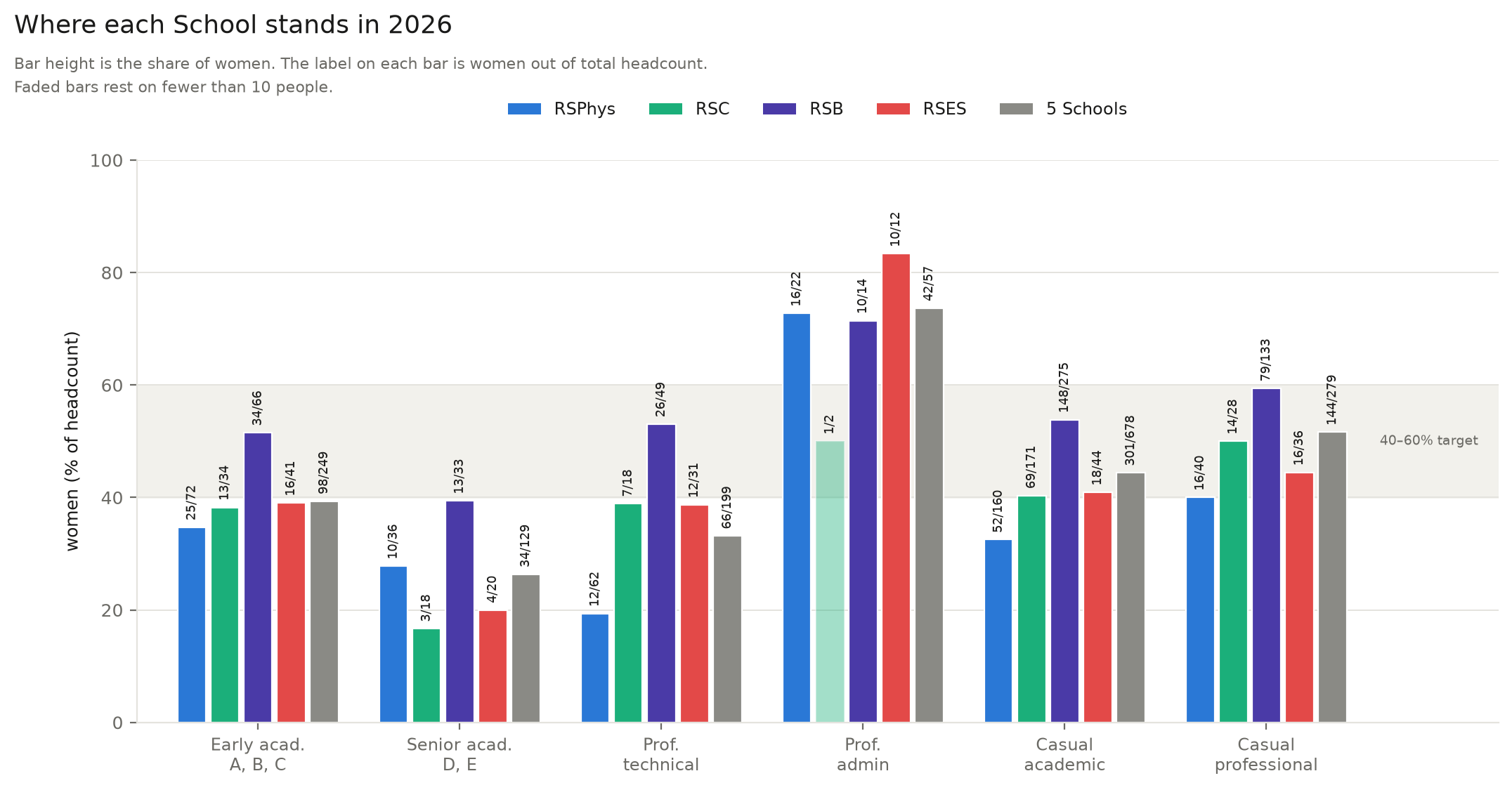
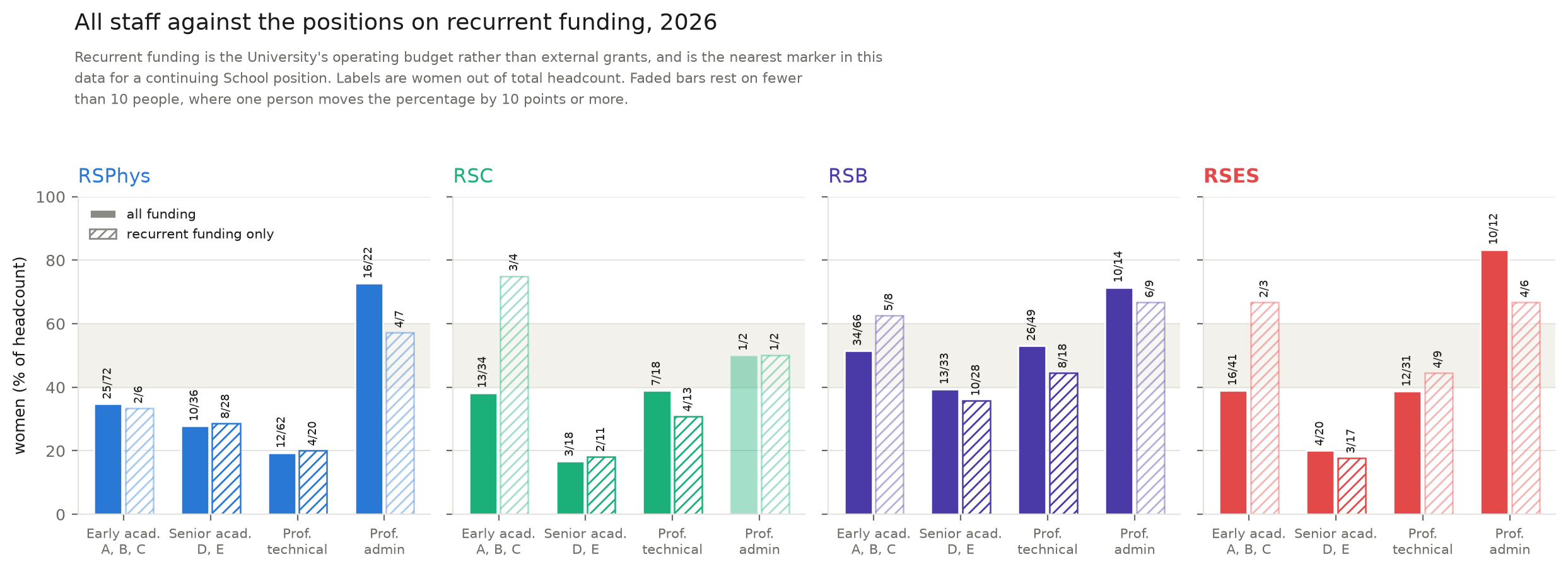
Early academic 16 of 41. Senior academic 4 of 20. Professional technical 12 of 31. Professional administration 10 of 12. Senior Professional Management 0 of 5.
The positions RSES itself controls
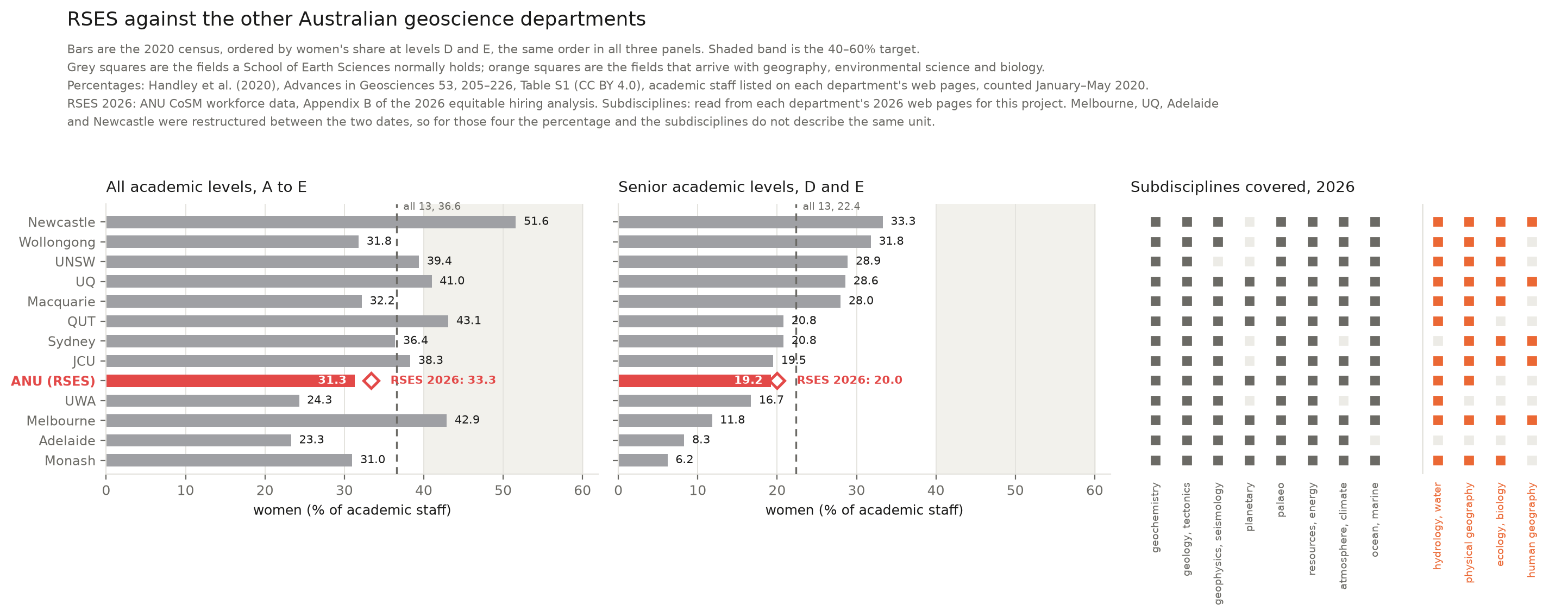
RSES against the other Australian Earth Science departments
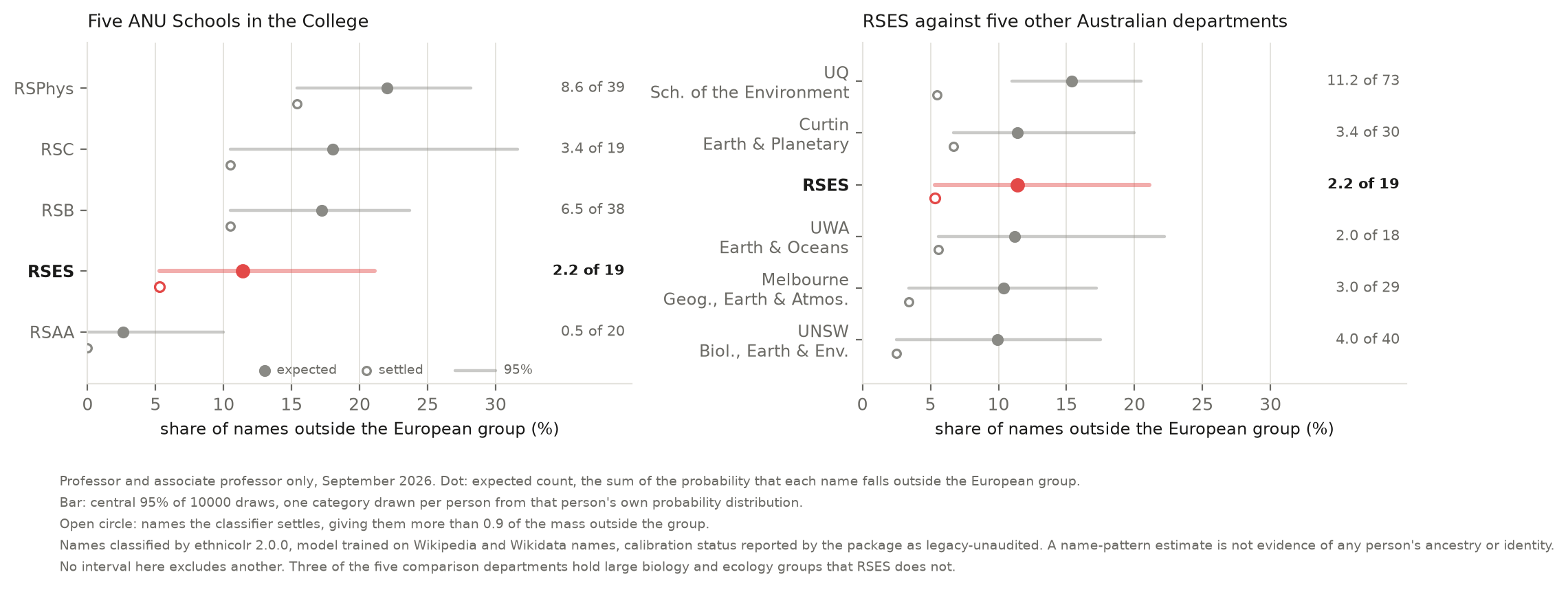
Ethnicity
Questions
Sources: 2026 CoSM analysis of equitable hiring progress; 2023 gender equity data; 2024 gender data; Handley et al. (2020), Advances in Geosciences 53, 205-226, CC BY 4.0.