My research sits at the intersection of numerical methods, geophysics, and high-performance computing. I develop computational tools and apply them to fundamental questions about how the Earth works, from the slow overturn of the mantle over billions of years, to the viscoelastic rebound following deglaciation, to the movement of water through continental-scale aquifer systems. A common thread across all of these is the use of adjoint methods and PDE-constrained optimisation to solve inverse problems: figuring out what we cannot directly observe from what we can.
If you are a student or researcher interested in any of these areas, I am always happy to chat. Drop me a line at siavash.ghelichkhan@anu.edu.au.
Research Themes
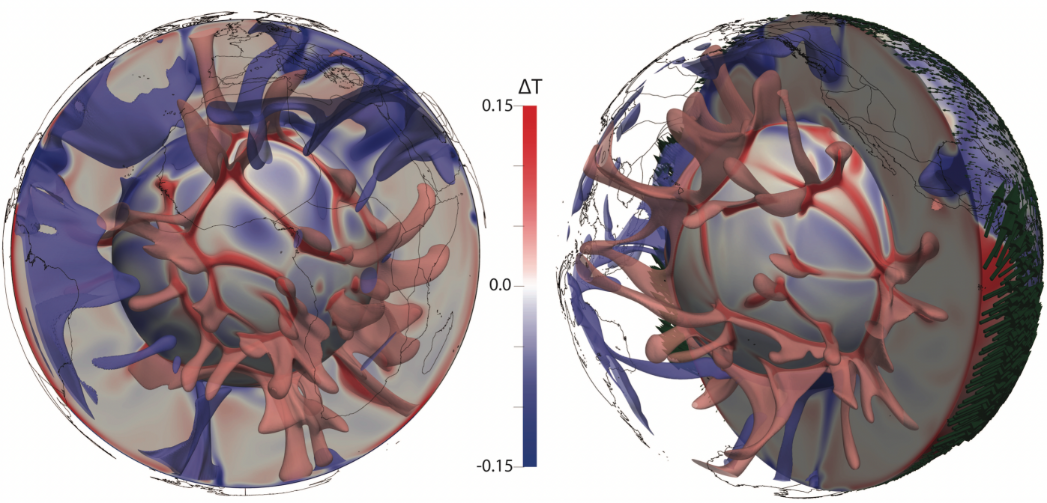
Mantle Convection
Adjoint-based inversion for reconstructing Earth's thermal and chemical evolution through deep time.
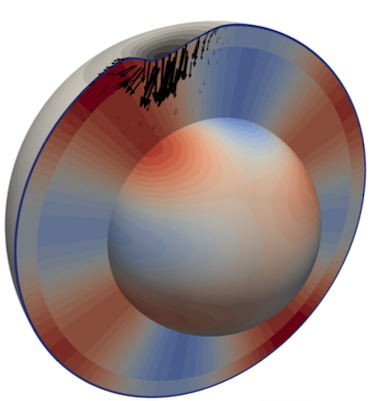
Glacial Isostatic Adjustment
Modelling the viscoelastic response of the solid Earth to ice sheet loading and its implications for sea level.
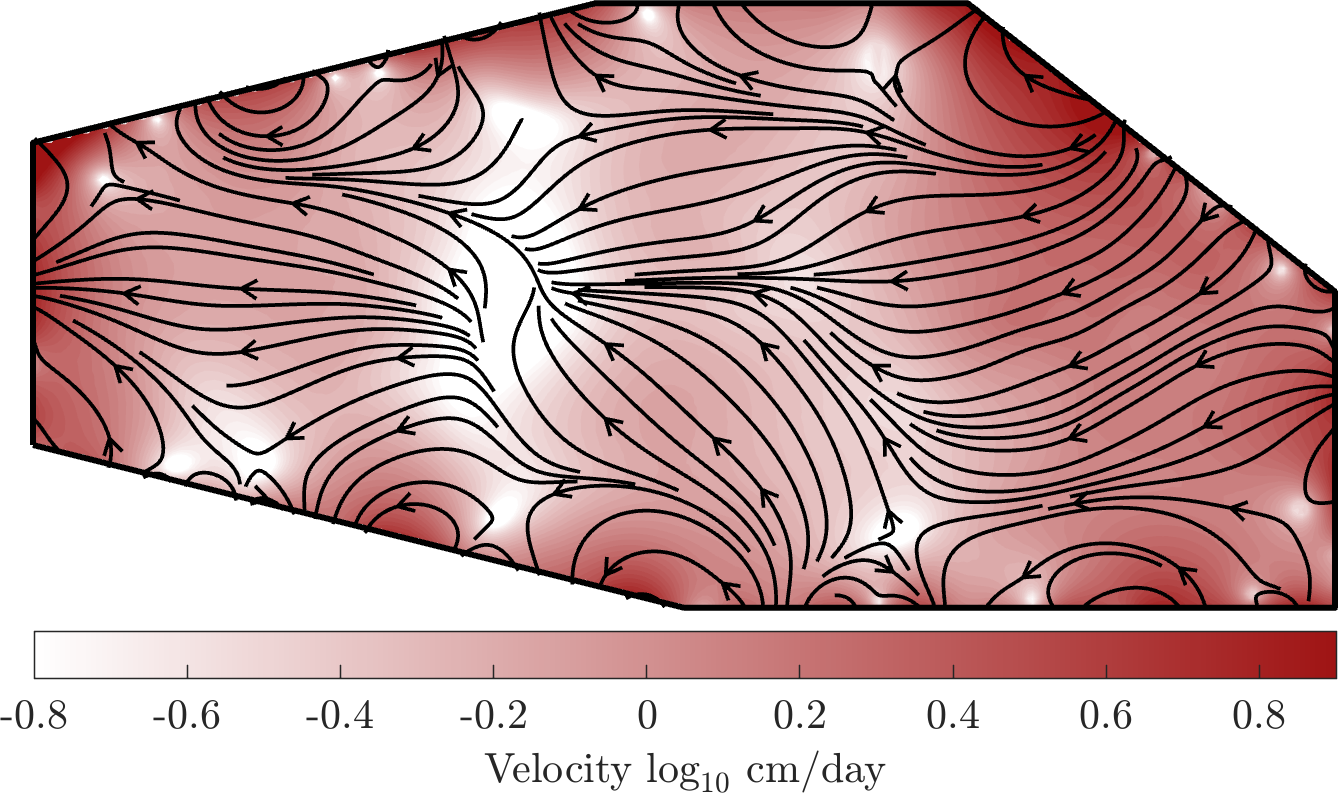
Continental-Scale Groundwater
Adjoint methods for the Richards equation to build digital twins of continental aquifer systems.
Software
G-ADOPT
A computational platform for geoscientific simulations and adjoint-based inversion, built on Firedrake.
G-DRIFT
A FAIR-compliant data toolkit for geodynamic and seismological datasets used in mantle convection studies.

SRTS
Tomographic resolution filtering for meaningful comparison between geodynamic models and seismic observations.

LLNL-ToFi
Tomographic filtering using the LLNL-G3D-JPS resolution matrix for seismic velocity models.
gtrack
Lagrangian particle tracking for computing lithospheric structure through geological time using plate reconstructions.